What Painting Taught Me: My First Six Months as an Artist


Six months ago, I picked up a paintbrush.
That sentence still feels a little strange to write.
I have a degree in design and have spent nearly 30 years working in the fashion industry—a career built around creativity, color, proportion, composition, storytelling and ideas. I have collaborated with artists, hired artists, coached artists and challenged them to push their work further.
But I had never actually painted.
I understood creativity from the perspective of a designer and creative leader. I knew how to look at something and say, This needs more tension. Simplify this. Push the color. Change the scale. Let this breathe.
What I didn't know was what it felt like to stand in front of a blank canvas and have to do those things myself.
And that has been humbling, frustrating, exhilarating—and incredibly freeing.
These are a few things my first six months of painting have taught me.
Breathe
Painting has taught me to breathe.
Not metaphorically. Literally.
When I'm trying too hard to make something work, I notice that everything tightens—my hand, my marks, my thinking. I start trying to control the outcome instead of responding to what's happening on the canvas.
The best moments often happen when I stop.
I step away.
I breathe.
And then I look again.
It's amazing how often the answer appears when I give myself enough space to see it.
Practice Changes Everything
There is no shortcut around doing the work.
After spending so many years in a creative profession, I think part of me expected my eye and design experience to translate immediately through my hand.
They didn't.
Knowing what you want to create and knowing how to physically create it are two very different things.
I've learned that every canvas teaches me something. Even the ones I don't like. Maybe especially those.
A brushstroke that felt awkward a month ago suddenly feels natural. Mixing color becomes more intuitive. I understand how paint moves differently. I begin recognizing when to add something—and, more importantly, when to stop.
There is something beautifully democratic about practice.
You simply have to show up.
Let Go of Inhibitions
This may be the biggest lesson.
For much of my career, creativity has existed within a framework. There is always a customer, a brand, a season, a deadline, a financial target or a business objective.
Those constraints aren't necessarily bad. In fact, they can make you a better designer.
But painting has reminded me what creativity feels like without a brief.
There is no merchant asking whether the color will sell.
No presentation.
No approval meeting.
No one telling me what the answer needs to be.
Just me and the canvas.
At first, that freedom was surprisingly intimidating.
Now it may be the thing I love most.
I've learned to make the strange mark. Use the unexpected color. Paint over something I spent hours creating. Leave part of the canvas unfinished. Change direction halfway through.
The less I try to make something "good," the more interesting the work becomes.
See Things Differently
Painting has changed the way I look at things.
I notice shadows.
Negative space.
The strange green underneath a leaf.
The lavender hiding inside something that initially looks gray.
The shape created between two branches rather than the branches themselves.
I've spent my entire career looking at color and proportion, but painting has somehow slowed my eyes down.
I'm not simply looking at an object anymore.
I'm looking at relationships.
Where does the eye travel? Where does it rest? What happens when something feels slightly off balance? What happens when one flower becomes disproportionately large or an edge disappears entirely?
Painting has reminded me that seeing is a creative act in itself.
Pause for Reflection
One of the hardest things to learn has been when not to paint.
My instinct as a designer is to solve.
Something isn't working? Fix it.
But painting doesn't always respond well to that kind of urgency.
Sometimes the best thing I can do for a painting is leave it alone.
Walk away.
Come back tomorrow.
Turn it upside down.
Move it into another room.
Look at it from 20 feet away.
The pause has become part of the process.
And perhaps that's a lesson that extends far beyond painting.
Not every problem needs an immediate answer.
Sometimes clarity arrives when we stop trying so hard to find it.
Become a Beginner Again
There is something incredibly vulnerable about being a beginner at this stage in my creative life.
I'm accustomed to knowing what I'm doing.
Painting took that away.
And I'm grateful for it.
Being a beginner gives you permission to experiment. To make bad paintings. To change your mind. To ask basic questions. To follow curiosity instead of expertise.
Six months in, I certainly don't feel like I've figured out how to paint.
But I'm beginning to understand how I want to paint.
Loose rather than perfect.
Emotional rather than literal.
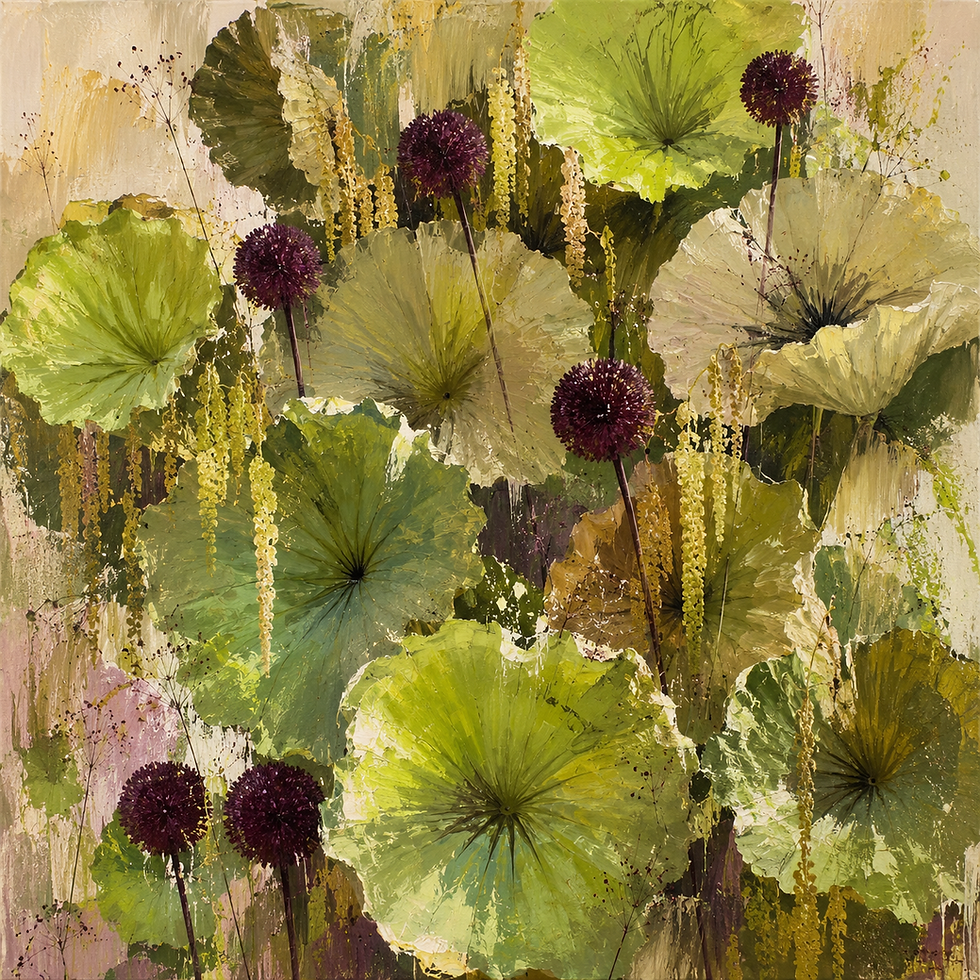
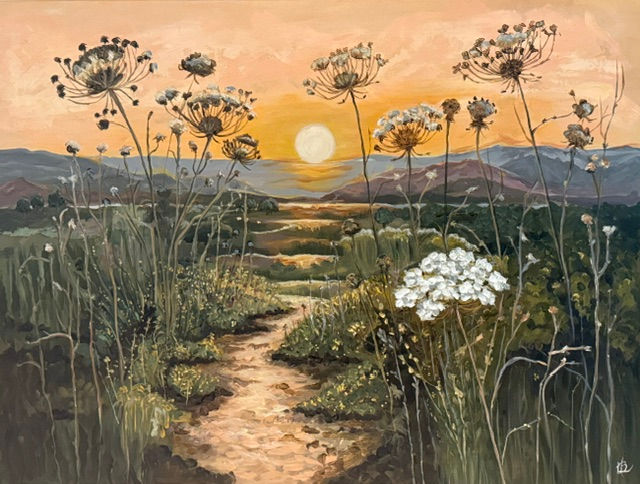
More interested in the feeling of a flower, landscape or moment than reproducing exactly what I see.
I'm discovering the marks that feel like mine.
And perhaps that's the most exciting part.
Six Months In
I started painting because I wanted another creative outlet.
I didn't expect it to change the way I thought about creativity itself.
Thirty years in fashion taught me how to design.
Six months of painting is teaching me how to let go.
To breathe.
To practice.
To trust my instincts.
To see more clearly.
To leave room for imperfection.
To pause.
And to remember that creativity isn't always about knowing where you're going.
Sometimes the most interesting thing you can do is pick up the brush, make the first mark and see where it takes you.

Comments